At work, as I stand in a billowing cloud of dust, a haze I suspect of being both physical and epistemological and one that I'm trying my damnedest to see through, one of the many things that I have been thinking incompletely about lately (it's hard to follow any single thought to conclusion inside this cloud of dust... hence, epistemological haze) ever since the release of Watchmen at least, a movie that I can't seem to get out of my head, but not for the right reasons, not because I liked it so much, but because for me, being a fan of the Alan Moore graphic novel, that film highlighted for me in ways that I hadn't quite thought of before the limitations of the cinematic medium, and not just the limitations of an uninspiring director, nope, but of the medium itself, but so anyway, one of the things that I've been thinking about lately is that a terrible clarity exists in film. Film, pictures of any sort really, impose a vision - one might say version - of reality upon us that, at least as far as our visual sense is concerned, should be accepted as reality. Pictures make certain demands upon or awareness of reality. Of course, when it comes to films, most of us, instead of being left to the mercies of clogged doors of perception, appeal to an epistemological structure that does not depend solely on sight, allowing us to discriminate without much hesitation or confusion between reality and fantasy. But I am not talking about artistic irony or suspension of disbelief. No, I'm talking about perception and how it relates to artistic interpretation. The clearer the image, the less room we have to negotiate with what we are seeing. I am talking, you see, about Dr. Manhattan's Penis.*
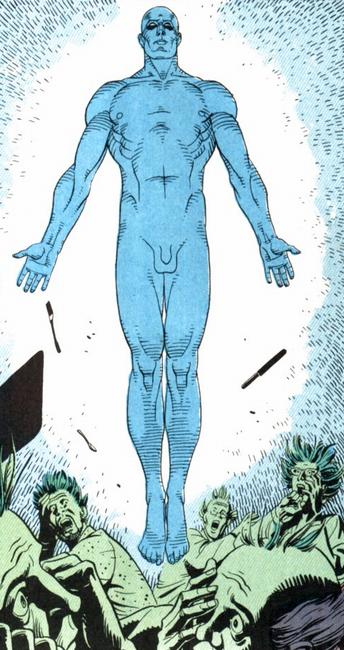
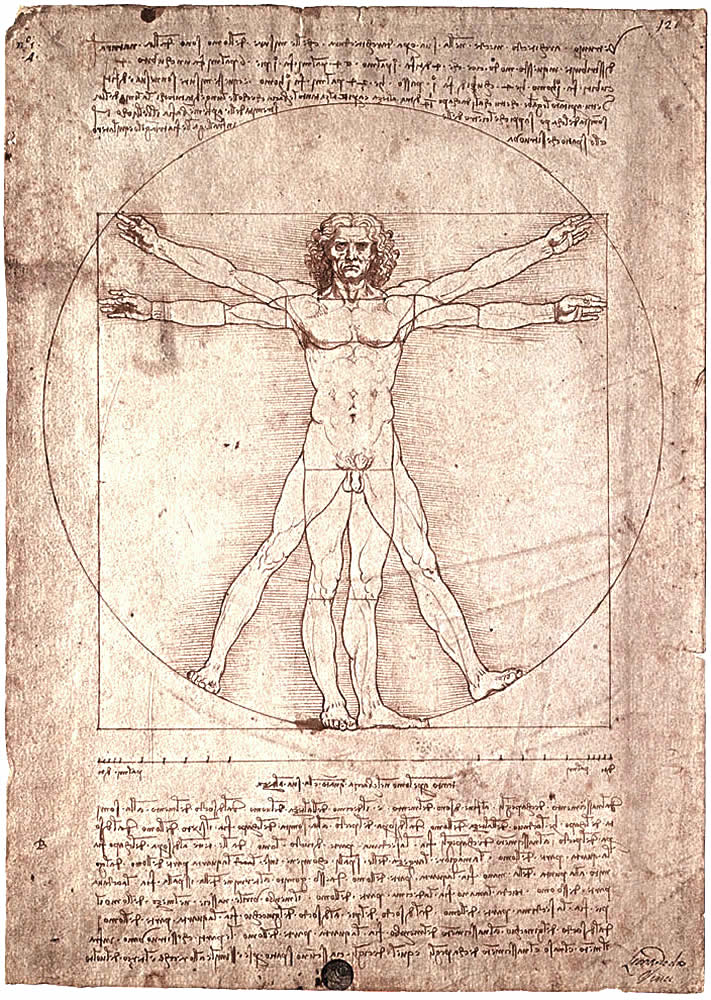
In Watchmen, Dr. Manhattan, previously John Osterman, is a sort of atomic super-being. Having been literally atomized in a laboratory accident, he reconstructed himself, particle by particle, into something else entirely, a being capable of manipulating matter and energy with nothing more than thought and will. As his fellow scientist and friend put it after John's post-accident reappearance: God exists, and he is American. But so, John, now far beyond anything recognizably human, finds himself slowly becoming detached from normal, everyday experience, a withdrawal that plays an important part in the Watchmen narrative. One of those detachments, it seems, is clothing. Though he does wear a sort of loincloth, or even sometimes a suit, when appearing in public, these are really more concessions to public morality than attempts at true modesty. Dr. Manhattan, probably because they have no meaning for him, just doesn't normally wear clothes, and in a novel so concerned with costumes and the way they create or conceal identity, this is likely important. So, for a good deal of Watchmen, you have a giant, blue-glowing man who recalls, more than anything, Da Vinci's Vitruvian man,walking around with no pants on. Just, you know, swinging in the breeze. On paper, in the panels of the novel, this works, partly because on the page the whole thing remains largely conceptual but also because of the way that Dave Gibbons chose to draw him (see above linked image), you do not so much get a penis as the suggestion of a penis.
In Zack Snyder's Watchmen, however, Dr. Manhattan's penis thrusts itself off the page, out of the realm of the conceptual, and into the full monty of visual clarity. There is no negotiating with this penis, no sir. It is there, on the screen. It moves. It possesses a lurid gravity.
Setting aside - setting far, far aside, so far aside, in fact, that you can't even see them, since they really aren't what I want to get into here - questions about the morality of on-screen nudity, it seems to me that something is lost, something perhaps critical, in this transition from concept to image, something I'm only starting to become aware of. The graphic novel is already a bridge between what is strictly textual and strictly visual, but even on the page, in this gentle blending of mediums, wiggle room can be found. A great deal of imagination is required to bring to life the images, either visual or literary. Readers aren't only consumers, they are participants. In film, or at least in most films, however, this type of imagination - which brings to life the art in the reader's mind, which brings the opportunity for self-evaluation and interpretation, which brings moments of insight - is no longer required. Another type may be, but not this one, not normally. Much of the imaginative, and what's worse, much of the hermeneutical work traditionally performed by the consumer of art is now done by the film itself. This is not an insurmountable hurdle, however, but it does require a deft hand and and a bit of trust in the audience. It requires relocating the conceptual, being aware that, though there are a few, there are not many overlaps between the literary and visual mediums. What is preciously ambiguous in one is crudely, vulgarly made obvious and dull in the full light of the other. A picture may be worth a thousand words but make that same picture move and its worth suddenly plummets. Ten words, maybe. Or fifteen. It is analogous, I think, to language. In the fuzzy passages of abstraction and conceptualization, a thought grows and expands, fills cathedrals worth of psychic pages: the thought is infinite. Spoken aloud or written down, that thought is shackled, chained, shoved roughly through Blake's dirty doors of perception. Limited, probably unintentionally, by our fumbling attempts at language.
Recently, Battlestar Galactica came to a triumphant finish. In poking around the various discussions online, however, I came across an interesting species of thought: some fans were actually disappointed in the series' finale because it left so many things "open." This sort of puzzled me because, other than a few narrative threads that simply didn't get treated (and most of these weren't terribly important), the last episodes wrapped up all the big questions. Wrapped up, that is, in that much was suggested, much was implied, much left in appropriate ways to the viewers imagination. But some viewers seemed angered by the endings provided. They apparently wanted everything spelled out. Perhaps they would have been satisfied if Edward James Olmos had turned to the camera and narrated each characters conclusions in detail, perhaps including such pointless things as what each of them ate for breakfast the next day. Maybe then they would have been satisfied. But this sort of petulent demand for absolute clarity is, I think, a consequence of what I am talking about. having grown accustomed to the cinematic medium's ability to provide absolute visual clarity, the viewer/reader's place in the creative process is lost. It goes beyond want... most viewers need everything spelled out to them, just like in a CSI episode.
We have lost the ability to negotiate with art. We are no longer adults, conversing like friends. At the feet of art, we are children. Uncomprehending. Dull. Unable to fully engage.
There are ways for the visual medium to be challenging. In the hands of filmmakers like David Cronenberg, Paul Thomas Anderson, the late Stanley Kubrick, people like this, filmmakers who understood the strenghts and weakness of visual communication, movies possess as much power, as much ambiguity, as much "literariness" as literature. There is no reason to settle for dull art.
So, trapped in my dusty haze, I ponder these things. Incompletely. No single medium is without limitation. And I am growing more and more aware of film's limitations. Watchmen isn't a horrible film. But it does highlight the problem of a medium's versitility. Brought to life, Dr. Manhattan's giant blue member is distracting. But Snyder was, I think, trapped: he could either be "faithful" to the text** (whatever that means) or adapt it to the new medium. Neither is entirely preferrable, so I think Watchmen should have stayed exactly what it was. But Watchmen isn't the problem. It only tugged into the open a question that had been slowing gathering force in my mind. As we hurl ourselves headlong into new technological frontiers, with ever expanding entertainment vistas opening up in front of us, as hi-def technology becomes more readily and easily available, I'm wondering if a clearer, sharper image is really what we need. Maybe the older, fuzzier images nurtered healthier imagintions.
*****
UPDATE: As my friend Life of Turner points out - and I can always trust him to point these things out - I may have come across as a bit too iconoclastic here. I'm not dismissing the medium entirely. As anyone who has met me or reads this site already knows, I have invested a great deal of my time and mental activity into film. I'm not about to abandon it. I think great directors, and sometimes even not so great ones, powerfully employ the medium, twisting it, manipulating it, forcing it to play on our emotions and intellects in ways we may not have been prepared for; they throw back into Marshall McLuhan's face his aphoristic assertion: the medium may be the message, but we can manipulate the medium. However, unless you*** are Lynch or Herzog or Cronenberg or (P. T.) Anderson, or some one of the other very few people out there really making films, and I mean really making them, you are more likely the manipulated in this situation and not, as you may think, the manipulator. And for the self-unaware, mediums are tyrannical masters: they will break your back and take from you everything. The cinematic medium is a savagely literal one. It relies, almost exclusively, on sight, and sight, as my master William Blake taught me, is defective. "We are led to believe a lie / when we see not thro the eye." Years of literal conditioning has left audiences far less jaded and sophisticated than they think. They are often imaginative infants, craddled within the medium's dictatorial arms. What we read, what we watch, what we play - these things shape our minds. So this isn't a dismissal of the medium. It's a desire to see the medium used properly. As long as filmmakers rely on their medium's visual clarity (and those who do almost always couple visual clarity with dialogue so utterly banal and dull as to boggle the mind - a double crime against art), as long as, in other words, we as viewers are meant to turn off our minds and simply accept what we are seeing, film and television will continue encouraging us into a downward spiral that ends in the opposite of enlightenment, in mental darkness.
Too much? Nay, not enough!
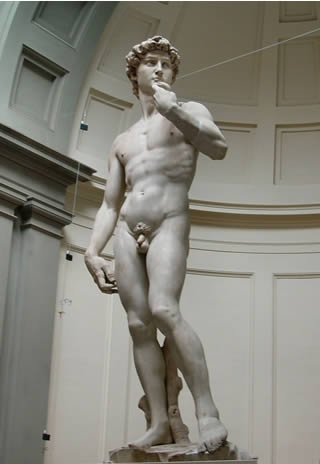
*Interesting side-story. The other day I found and uploaded onto photobucket.com this picture of Dr. Manhattan taken from the Watchmen graphic novel. When I logged back into photobucket, however, I was told that the image, I guess because it includes a picture of a penis, had been moderated. Frustrating. I wonder if an uploaded picture of David would receive the same treatment.
** I think that he, by remaining so visually faithful to the text (in this case image), probably thought he was being "edgy" (whatever that means) by so prominently including the Doc's giant dong. Sorry, Snyder... it just adds another layer of tonal schizophrenia to an already confused film.
*** This is perhaps my most inappropriate use of "you" ever. Really, it doesn't make any sense.